What does where were you born? mean?
Where were you born means “Where did you come into the world?”, that is, “Where is your place of birth?” the English question is the same for men and women, unlike in Polish!
Of course, we can make things much more complicated if we enjoy descriptive grammar!
Let’s look at the phrase word by word:
- where = where (adverb, although this is a debated topic; maybe it is more like a relative pronoun?)
- were = were — the past tense of the verb verb “to be” in the past tense
- you = you (personal pronoun)
- born = born (the third form of the irregular verb bear (to carry). This word also works as an adjective, for example: born ready = ready from birth, newly born child = newborn child)
What is more, this sentence is in the passive voice in the past simple tense.
Interesting, right? 🙂

How do you answer where were you born?
You answer in the same way:
- I was born in Opole.
(Opole is a city in southern Poland.)
- I was born in Poland.
(I was born in Poland.)
- I was born at a hospital.
(Note: both at a hospital and in a hospital are used; in is more common.)
where were?
As if all that were not enough, the words where and were like to get mixed up. Paradoxically, confusing the spelling of where and were is also one of the most common native-speaker mistakes!
So let’s remember that the one with the letter H in the middle (“Where?” In the middle!) is… where
Meanwhile, the past tense of to be (were) has no letter H. That’s all.

was were?
We can also ask why sometimes we hear was and sometimes were. Native speakers mix these words up too. This comes from the conjugation of the verb “to be” in the simple past tense. What does it look like exactly?
In the singular, we use was except with “you”, that is:
- I was – I was
- you were – you were
- she/he/it was – she/he/it was
In the plural, we use only were:
- we were
- you were
- they were
(we/you/they were)
Notice that in English, “you” means both singular and plural. That is why we always use were here.

How we do not say where were you born?
Learners sometimes produce incorrect variations of this phrase, such as:
1. Where did you born? Wrong
Was born or were born are phrases in the so-called passive voice. Something “was done.” Of course, we can ask:
- Where did you go?
(Where did you go?)
- Where did she buy it?
(Where did she buy it?)
- Where did I put it?
(Where did I put it?)
But those questions use active verbs (go, buy, put), which is a different structure.

2. Where are you born? Wrong
You are means “you are.” That means something is happening in the present tense. But by definition, we were born in the past! So there is no point in using the present tense here!
Where are is correct in other situations:
- Where are you?
(Where are you?)
- Where are my keys?
(Where are my keys?)
or, with born as a participle in a present-tense passive question:
- Where are the most children born today?
(Where are the most children born today?)

Where were you yesterday and other examples
Phrase where were in questions in the simple past:
- Where were you yesterday?
(Where were you yesterday?)
- Where was she from?
(Where was she from?)
- Where was it?
(Where was it?)
- Where were we?
(Where were we?)
Where were in the past continuous:
- Where were they going?
(Where were they going?)
- Where was she living?
(Where was she living?)
- Where were we going to put it?
(Where were we going to put it?)
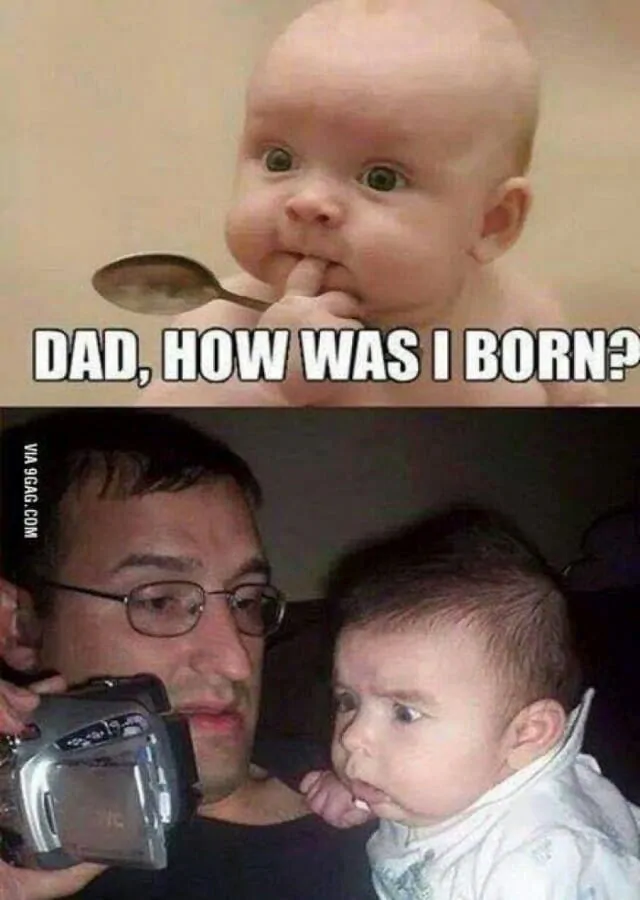
Exercises with where were and everything else
As you can see, descriptive grammar can make even a simple phrase look complicated. But did you know you have been speaking grammar all along, just as Molière’s Monsieur Jourdain spoke prose without knowing it? Does an English speaker know what conditionals are?
We really do not need that much grammar!
If you want to learn to speak English, start speaking English!

Then, like a child, you will absorb much of the grammar and vocabulary you need without effort. You only need correct, carefully prepared examples and someone you can speak to without stress.
That is exactly what learning English with the online Speakingo course is all about!
The learning process is 100% conversation, and it is the most effective way to learn English that nobody talks about. And what is interesting is that you do not only listen to the silky voice of a native speaker, and not only look at lovely photos, but above all you talk to your computer or phone, which understands you, praises you, and, if necessary, patiently corrects you. You learn English without stress, without travelling anywhere, whenever you want and for as long as you want.
Try the method yourself: your first trial week is free and carries no commitment.
Sign up for the Speakingo online English course!
Want to understand English speakers? Start speaking like them!
Do you still mix up any other words besides where and were?
Write in the comments and I’ll be happy to answer!