

English Teenagers Are the Worst in Europe at Foreign Languages
Do you worry about making mistakes when you speak English? Remember that the English person you are talking to may well speak no foreign language at all. In exams, English teenagers came out worst in Europe!

How to Write a Clear Bug Report in English
If your bug report in English sounds like “something is not working, please check it,” developers may make the face of someone who has just received furniture assembly instructions with no pictures. But you can write it clearly, briefly, and

Spaced Repetition: How Do Spaced Reviews Work?
Just yesterday, you could easily ask for directions in English. Today you are standing in the street and cannot remember how to begin. When someone says the same sentence, you understand it right away. That is a good reason to come back to the phrases you have learned after a


English Past Tenses: Past Simple and Past Continuous
English past tenses past simple and past continuous – a comparison of these two popular English grammar tenses.

He or She? Personal Pronouns in English
Not sure whether to say he or she? If the problem is grammar, not your listener’s gender, then you probably need a quick review of English personal pronouns!

Anglicisms – Language Calques from English
Anglicisms and language calques, despite the complaints of some linguists, keep entering Polish and other languages. How can that help us learn English?

English Tenses Overview – 12 Great Ones and a Cat!
If English tenses are getting mixed up in your head, this overview with a cat will help clear things up. (What cat?!) A light-hearted, telegrahic summary of the twelve great English tenses.

English Conditionals: The Famous Conditionals
One of the topics in English that causes many problems for us is conditionals, also called English conditional sentences.
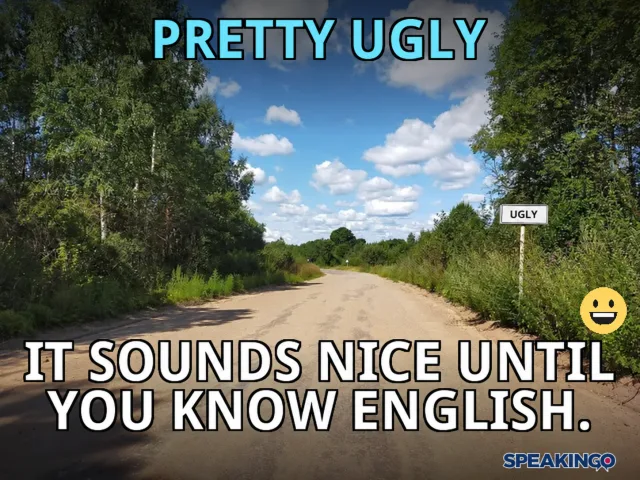
Oxymoron in English: What It Is and Why “Pretty Ugly” Works
“Pretty ugly” sounds like a compliment after a hard week. It seems nice, but it is not. In English, it works in a different way, even if it looks odd at first.

To Be or To Have? English Have Got and To Be [Conjugation]
To be or to have? Good question! In this post, however, we will learn something much less philosophical — how to conjugate and use the English verbs to be and have got in different grammar tenses.

Holidays in England: What Happens Between Halloween and Christmas?
Autumn and winter in England have their own rhythm: first pumpkins, then fireworks, a quiet pause, and finally mince pies. If you want to understand what really happens in the UK between the end of October and New Year’s Day,…

Monty Python Quiz: How Well Do You Know These Sketches?
Do you love Monty Python, a classic of English humour? Find out which Monty Python sketch character you are!

Contractions in English: contracted forms
Shortening in English is shortening, but that is not what we mean here. Let’s talk about the most important grammar contractions in English, which language experts gave a funny name: contracted forms.

Integrative or instrumental motivation for learning English?
Researchers distinguish two kinds of motivation for learning foreign languages. Find out whether you are driven by integrative or instrumental motivation for learning English. Linguists and methodologists have studied the process of learning foreign languages for years. A key element here is, of course, motivation for learning English. Not every learner has the same motivation,

English for companies: even -50% off!
SPEAKINGO’s online English course has a special business offer for companies and sole traders, with discounts and bonuses tailored to the size and length of the order. Ask for a quotation and see what it looks like in practice!

English Collocations: Why Do We Say Heavy Rain, Not Strong Rain?
You know the word “strong.” You know the word “rain.” You put them together in English and… you get something people can understand, but it sounds a bit like ordering coffee in a hardware store. That is why it helps to learn English collocations: words that usually go together. Heavy rain is usually heavy rain,

Is it possible to learn English on my own?
You can find many online English courses on the Internet, encouraging you to learn English at home. But is it even possible to learn English on your own?

A, an, the: Do English articles mean anything?
The English articles are the little words a, an and the. When and why do we use them, and when should we avoid them in English? And can they really change the meaning of a sentence in practice, for example by showing who caused a car accident?
