Contracted forms are especially important in spoken English — people use them because they are lazy.
If you are writing an official letter, it is better to use the full forms. Shortening in English is not how Queen Elizabeth II spoke in her speeches to the nation, but in everyday speech these forms are normal.

See also: An exclusive Speakingo interview with Queen Elizabeth 😉
What are contracted forms?
A very funny name, in my opinion. It simply means using an apostrophe (‘) instead of a few letters in a word.
We mainly use this shortening in English with the words to be and to have.
Shortening in English: to be
So, for example, we shorten to be like this:
- formal I am becomes the spoken form I’m, and in the negative I am not → I’m not
- you are → you’re and in the negative you aren’t
- he is → he’s and in the negative he isn’t
- she is → she’s and in the negative she isn’t
- it is → it’s and in the negative it isn’t
- we are → we’re and in the negative we aren’t
- you are → you’re and in the negative you aren’t
- they are → they’re and in the negative they aren’t
So we are more likely to hear: I’m happy. She’s happy. They aren’t happy, etc.
In questions, we always use the full form: Is he happy? Are they sad?

Notice that the contraction it’s (“it is”) looks very similar to its, meaning “belonging to it,” for example This is its spaceship = This is the spaceship of that being (of unknown sex). The difference is only the apostrophe (‘).
With the other persons, this problem will not happen. For more about who has what, see the post about a scary-sounding part of English grammar: possessive adjectives.
In the past tense, is changes to was. Affirmative sentences are not shortened (I was happy), and questions are not either (Was she happy?). But negatives are: He wasn’t happy.
Are changes to were in the past, so we also get: You were happy. Were they happy? In the negative, we shorten to: We weren’t happy.
In the future, it is will, which we shorten to ‘ll. I will marry her = I’ll marry her.

Shortening in English: to have got
Shortening works in a similar way with to have (got):
- formal I have (got) becomes the spoken form I’ve (got), and in the negative I haven’t (got)
- you have (got) → you’ve (got) and in the negative you haven’t (got)
- he has (got) → he’s (got) and in the negative he hasn’t (got)
- she has (got) → she’s (got) and in the negative she hasn’t (got)
- it has (got) → it’s (got) and in the negative it hasn’t (got)
- we have (got) → we’ve (got) and in the negative we haven’t (got)
- you have (got) → you’ve (got) and in the negative you haven’t (got)
- they have (got) → they’ve (got) and in the negative they haven’t (got)
Got does not add meaning here and is optional, which is why it is in brackets.
He, she, it use has instead of have, so the contractions look a little different. Here, too, you must be careful, because in the third person singular the contractions of to be and to have look exactly the same: he’s can mean both he has and he is.
We especially often use shortening in English with have when it no longer simply means that we possess something, but becomes an auxiliary verb — a word that does not carry meaning here, but shows which tense we are using — in the present perfect. More on that in the post about perfect tenses.

Shortening in English: other contracted forms
Another word we often shorten is would (“would” in conditional meaning):
- I would like to see her = I’d like to see her (I would like to see her)
We often meet it in the second conditional.
Sometimes you may see had shortened to ‘d.
- I’d seen her before = I had seen her before (I had seen her before).
Besides the context of past perfect described above, this contraction was once also used in the simple past, but today “I’d a car” sounds rather odd, so I do not recommend it.

It is worth noting that ‘d can be a contraction of both had and would.
Contracted forms in literature and poetry
In poetry or song lyrics, you can find contracted forms that help keep the rhythm of the text, for example:
- imprisoned = imprison’d,
- every = ev’ry,
- finger licking = finger lickin’
Slang contractions
Exactly. Shortening in English does not even have to be grammatically standard or elegant. Some contractions are close to slang. They can give our speech a fairly African American style, or at least show that we belong to the working class. Examples are:
- I want to – I wanna
- I am going to – I’m gonna
- I will not do it – I ain’t gonna do it / I’m not gonna do it
- There is no beer – There ain’t no beer
- I don’t know – I dunno.
- Give me my beer! – Gimmie my beer!
- I have got to brush my teeth – I gotta brush my teeth.
Initialisms and acronyms
In general, English speakers love shortening words. Especially at work, you will hear abbreviations whose meaning even another English speaker outside the field may not understand.
When it comes to acronyms, as in Polish, there are hardly any rules here. Sometimes the whole word is read, and sometimes the individual letters. Sometimes the abbreviation comes from the first letters of words, sometimes from syllables, and so on.

Acronyms are especially popular on the internet. These are our examples:
- BTW – By the Way – by the way
- FYI – For your information – so you know
- ROTL – Rolling on the floor laughing – rolling on the floor laughing
- WTF? – What the Fuck? – what the **** is going on?
- ASAP – As soon as possible – as quickly as possible (usually pronounced ay es ay pee, although you may also hear asap)
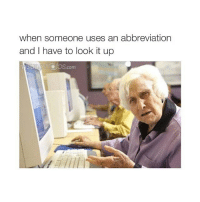
Funny acronyms
Acronyms are also a good topic for jokes.
For example, on the English site Jokes4Us you can find plenty of funny acronyms, such as:
- B.I.T.C.H. = Boys, I’m Taking Charge Here! (the noun bitch means a female dog, literally and figuratively, as in Polish; here, however, it is expanded as “Boys, I’m Taking Charge Here!”)
- D.I.E.T. = Did I Eat That? (“Did I eat that?”)
- L.A.D.Y. G.A.G.A. = Like All Damaged Youths, Great At Getting Attention (Like all damaged kids, great at getting attention)
- P.O.O.R. = Passing Over Opportunities Repeatedly (the adjective poor means “poor,” and here it is expanded as “Passing Over Opportunities Repeatedly”)
- P.M.S. = Psychotic Mood Shift (PMS is premenstrual syndrome, also an acronym for Premenstrual Syndrome; here, however, it is expanded as “Psychotic Mood Shift” 🙂

Exercises with contracted forms
Since contracted forms are used mainly in speech, it is no surprise that you will find many of them in the Speakingo online English course!
This modern and effective online English course is 100% based on speaking. By repeating correct sentences, we subconsciously absorb all grammar structures and happily learn the most important English words.
Anyway, the best way to see this for yourself is to try it — the first week is completely free!
Try the Speakingo online English course for free!
English will not learn itself!
What do you think about these contracted forms? Write in the comments how your “shortening” is going!
If this text cleared things up a bit, share it with your friends!